Born From the Ice
The idea of Sädemesaar was born in the northern nature of Estonia — among damp forests, moss on stones, sea wind, and glacial boulders left among pines, shores, and islands. They became part of the landscape so long ago that they seem to be its natural foundation.
Their story began thousands of years ago. Blocks were torn from the rocks of Fennoscandia and carried toward the land that would become Estonia.
A glacier crept down from the north — slowly, inexorably, like time itself.
For an age, ice buried the whole of Estonia.
As it melted away it left the boulders behind — rändrahnud.
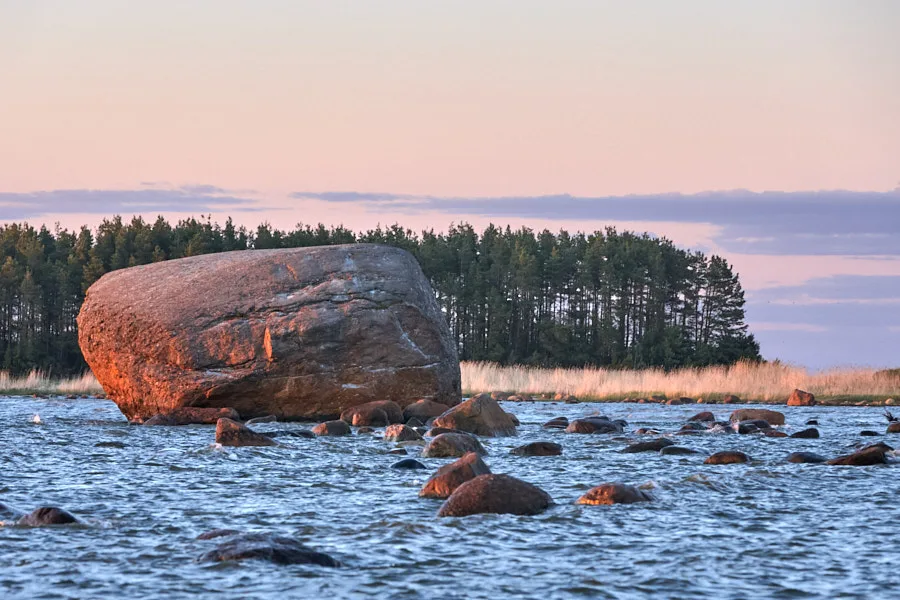 Ehalkivi · Letipea Cape~930 m³ and over 2,500 tonnes — Estonia's largest glacial boulder on land.
Silent Signs Of An Ancient Journey
A glacial boulder is a stone more than a metre across, carried by ice from its place of origin to somewhere new. For Estonia that origin was Fennoscandia — the Baltic Shield — and the place they came to rest became the East European Platform.
In other words, many of Estonia's boulders came from far away. The ice brought them down from the north and left them in the landscape — silent signs of an ancient journey.
They Lie In The Land
They lie in forests, on the seashore, among islands, by roads, in fields, and on trails. Some are hidden in thickets, some stand by the water, while others are marked with plaques as natural monuments. Moss grows on them, rain runs down them, and pines murmur nearby. There is something deeply northern in them: calm, peace, memory, and a sense of eternity. These are the rändrahnud — Estonia's wandering stones.
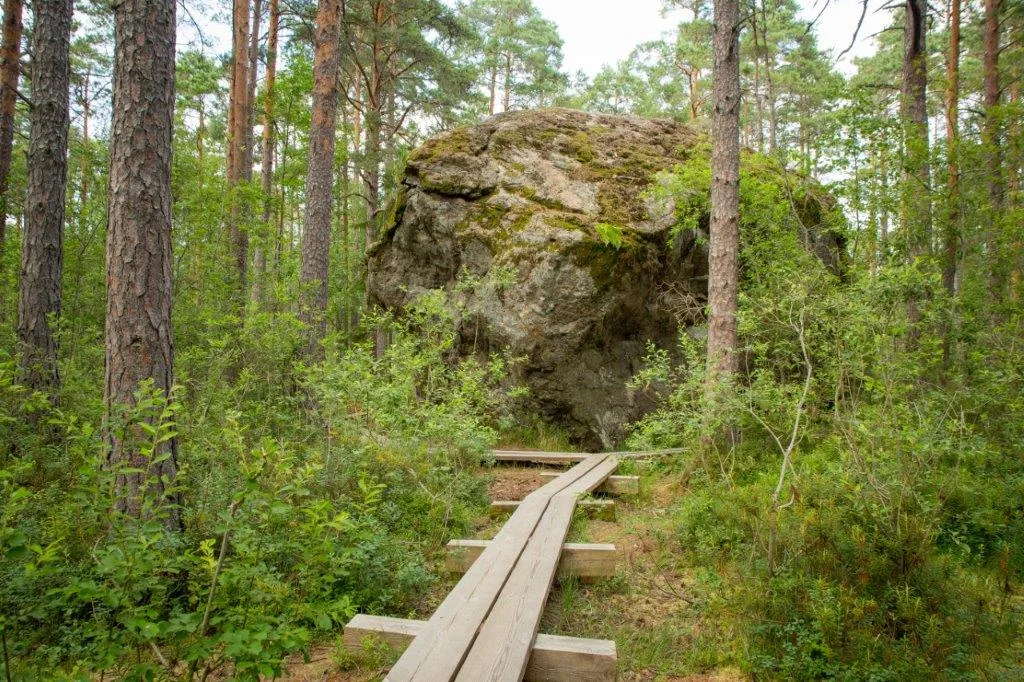 Majakivi · LahemaaA forest "lighthouse" on the Juminda peninsula, reached by the Majakivi–Pikaõmme trail.
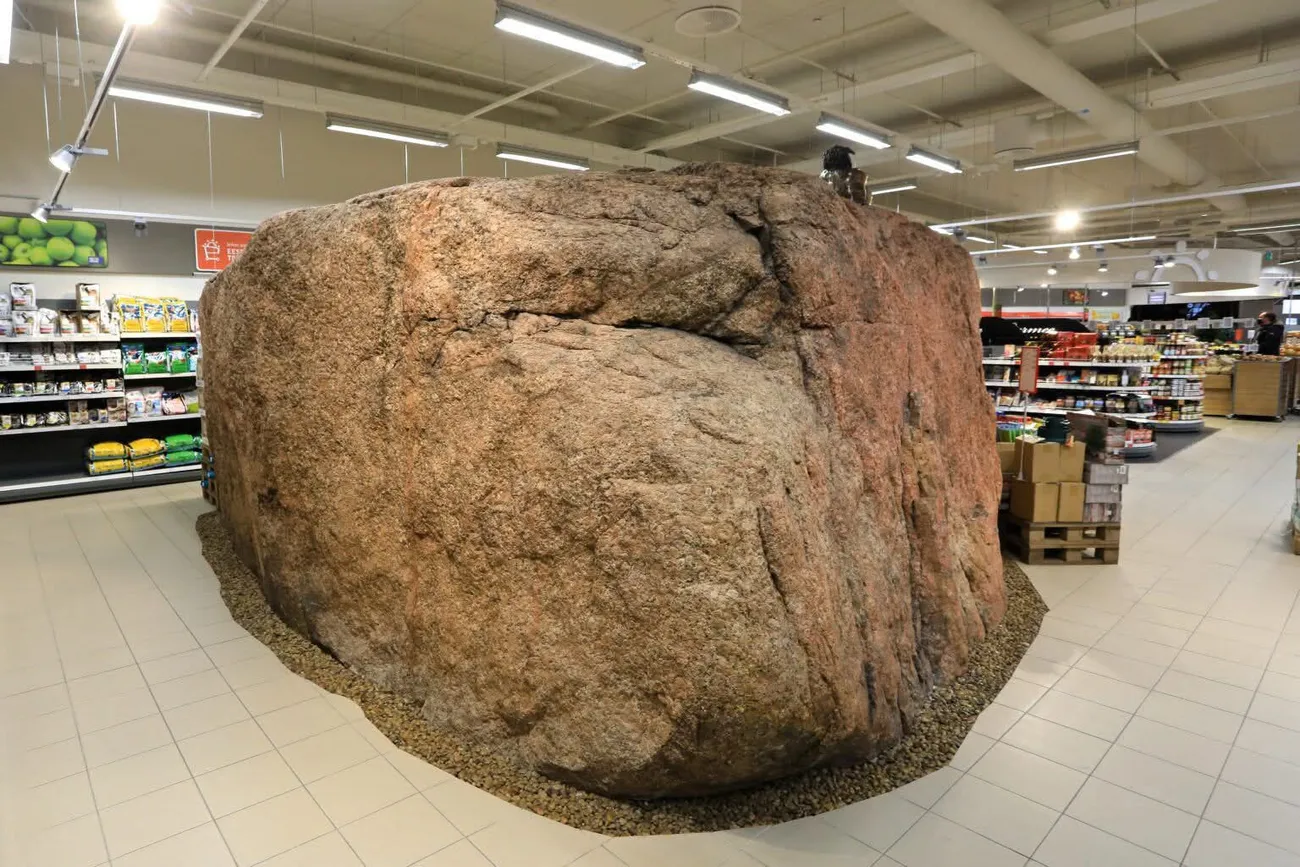 Viimsi Selver · HarjuA boulder kept in place in the middle of the produce aisle — the shop was built around it.
Named, Revered, Protected
Against the flat north of Estonia — once the floor of a shallow prehistoric sea — these giants look almost alien: striking enough that people gave them names, and stories. Many were revered as places of worship and sacrifice, and some of the folk tales tied to them have reached us still.
That respect endures. A great many are protected today — fenced, marked, cared for — and some are simply built around. In the Viimsi Selver supermarket a boulder stands in the middle of the produce aisle: rather than move it, the shop was raised around it, leaving its resting place undisturbed.
From Stone To Flame
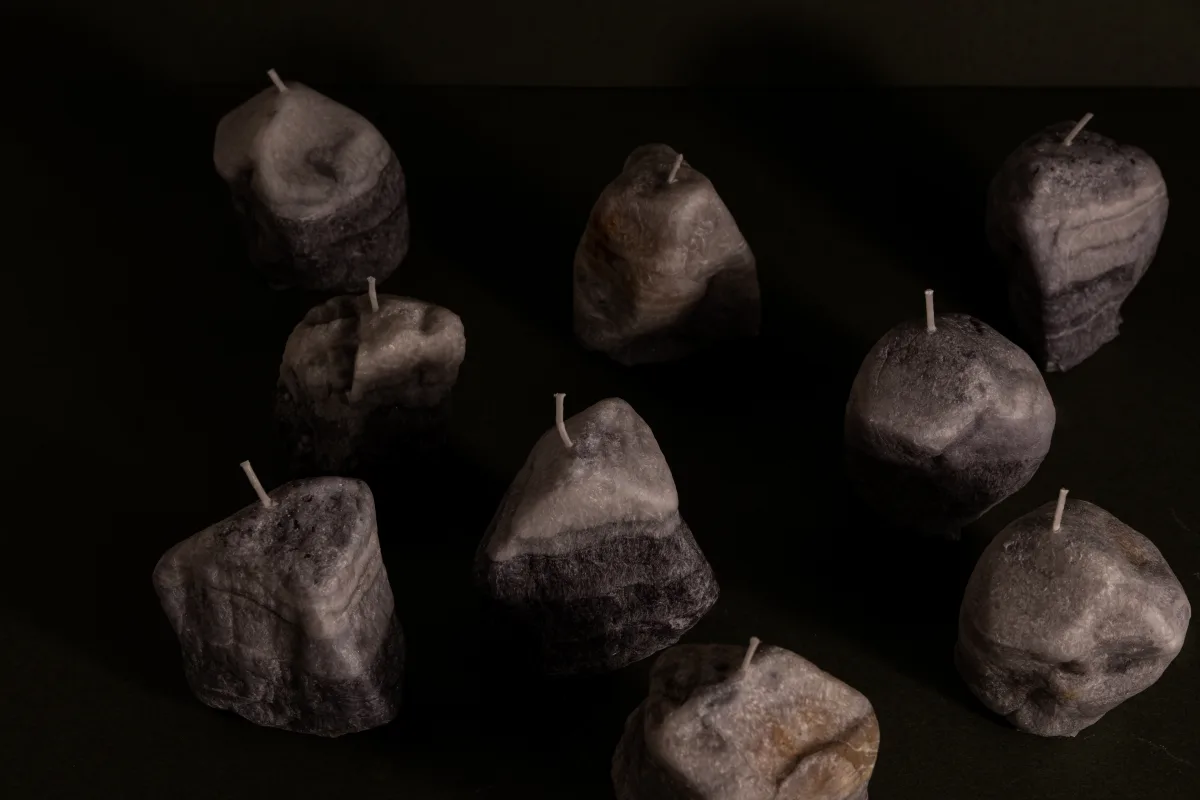
It was these stones that became the prototype for our candles — a souvenir that recalls a journey, the northern air, a walk along a forest trail, the sea, and the boulders left behind by the glacier. Sädemesaar candles are a way to bring home a fragment of this northern magic — a fragment of Estonia that stays close after the trip, or can be given to someone dear.
Shop The Candles
Why Boulders
Estonian boulders are not simply large stones — they are traces of the glacial age. A hiidrahn, a giant boulder, is one whose diameter exceeds 10 metres, or whose circumference exceeds 25.
Counts have climbed over the years — 83, then 96, then 111 — and modern estimates already reach around 150. Estonia is one of the richest countries in Europe for these wandering stones.
Stones That Inspire Us
Among Estonia's boulders are especially well-known ones — each with its own character, landscape, and history. Tap or hover a stone to meet it.
A Fragment Of Northern Land
We do not copy any particular boulder literally. We take the image itself: the uneven form, the natural weight, the calm of stone, its connection with land and time. These are candles for those who want to take with them not just a thing, but a sense of place — a fragment of glacial memory, a fragment of northern nature, a fragment of Estonia.
Bring One Home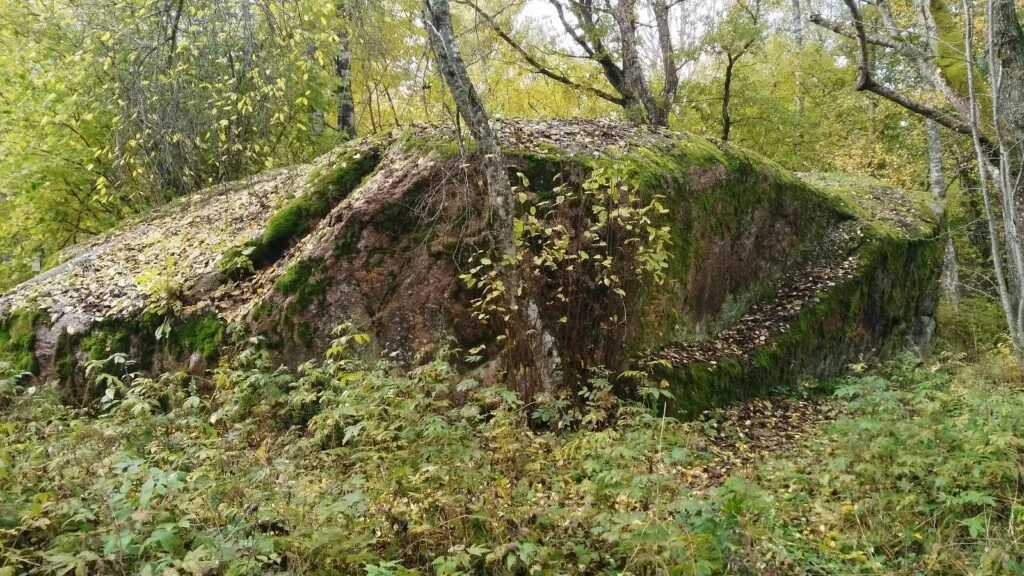 Kukka kivi · HiiumaaAn island boulder among juniper, wind and a soft northern quiet.
Learn More About Estonia's Boulders
The stones behind Sädemesaar are real places — part of Estonia's landscape, geology, protected nature, and walking routes.